Structural Drying & Dehumidification in Sherman Oaks, CA
Extraction only removes standing water. Commercial air movers and LGR dehumidifiers, monitored daily, are what actually prevent mold from taking hold afterward.
Structural drying and dehumidification is the process that follows extraction, using commercial air movers and LGR dehumidifiers in a calculated ratio to remove residual moisture from drywall, subfloor, and framing until it reaches a verified dry standard. In Sherman Oaks, equipment is adjusted for the space, standard air movers plus dehumidifiers for open rooms, LGR units for below-grade hillside spaces with limited airflow. Skipping or rushing this step is the leading cause of mold showing up weeks after a water loss. Call (818) 381-0379.
Removing Standing Water Is Only Half the Job
Once visible water is gone, materials like drywall, subfloor, and wood framing still hold moisture that isn't visible to the eye. Left alone, that residual moisture evaporates slowly into the room, raising humidity and creating exactly the damp conditions mold needs to begin colonizing within 24 to 48 hours.
A common mistake is renting a single box fan or running one dehumidifier and assuming that's equivalent to a professional setup. Drying equipment has to be sized to the square footage, the materials affected, and how saturated they are, running too little equipment, or pulling it too early because a space "feels dry," is one of the most common reasons a water loss turns into a mold problem afterward.
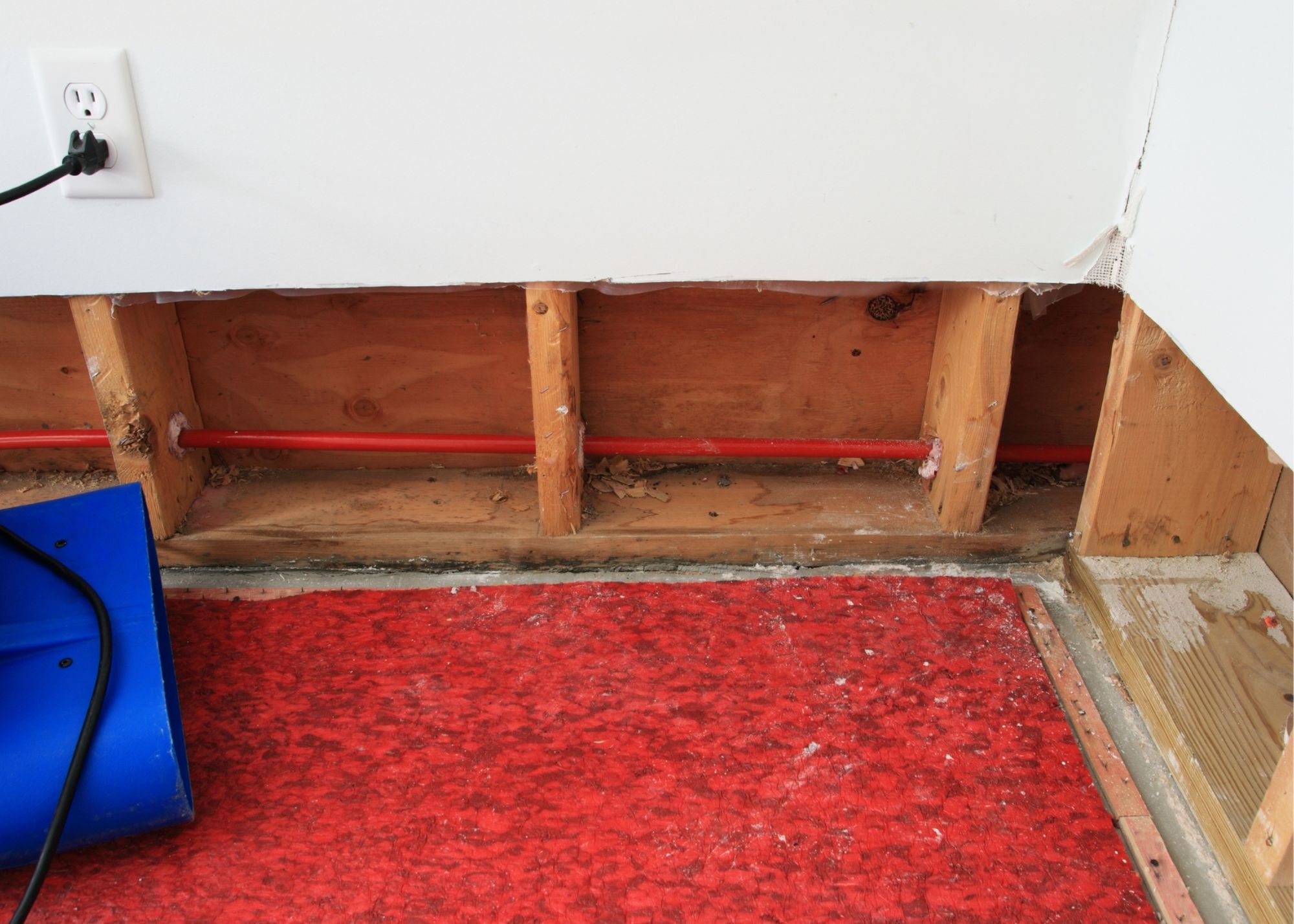
Equipment Sized to the Space, Verified with Data
Drying is a calculation, not a guess, based on square footage, materials, and daily moisture readings.
Equipment Calculation
Air mover and dehumidifier count is calculated from the room's dimensions, materials affected, and moisture load.
Active Drying
Equipment runs continuously in the calculated ratio, adjusted if daily readings show slower-than-expected progress.
Verified Completion
Equipment is only removed once moisture readings confirm the space has reached dry standard, not on a fixed schedule.
Residual moisture left alone becomes tomorrow's mold problem.
Call now and talk to a real Sherman Oaks technician in under 60 seconds. Free inspection, no call-out fee, and equipment set up the same day.
Call (818) 381-0379 NowLive answer, 24/7 · Sherman Oaks & the San Fernando Valley
When DIY Drying Isn't Enough
Water covered more than a small spill
Anything beyond a quick surface wipe-up needs calculated equipment, not a single fan.
Drywall or baseboard was affected
These materials hold moisture internally long after the surface feels dry.
The room still feels humid a day later
A sign that moisture is still evaporating from materials into the air.
The space is below-grade or poorly ventilated
These areas need LGR dehumidification, which standard consumer units can't match.
What Helps in the Meantime
Open windows if weather and safety allow
Basic ventilation helps somewhat while you wait, though it's not a substitute for equipment.
Keep the area clear of extra items
Gives technicians room to place air movers and dehumidifiers effectively.
Don't run your own equipment right before the visit
Helps the technician get an accurate baseline moisture reading first.
Plan for equipment to run a few days
Most jobs need continuous equipment operation, not just a single visit.
Structural Drying Across Sherman Oaks 91403 & 91423
Including below-grade hillside spaces and flats, plus Studio City and Encino.
Often Needed Alongside Structural Drying
Structural Drying & Dehumidification FAQs
What is the difference between an air mover and a dehumidifier?
An air mover circulates air across wet surfaces to speed evaporation, while a dehumidifier removes the resulting moisture from the air so it doesn't just resettle on nearby surfaces. Both work together in a set ratio, running air movers without enough dehumidification can actually prolong drying by raising humidity in the room.
What is an LGR dehumidifier and why is it used?
LGR stands for low grain refrigerant, a type of dehumidifier that can pull moisture out of the air even in cooler, more humid conditions than a standard unit can handle. It's especially useful in below-grade spaces and enclosed areas common in Sherman Oaks hillside properties where airflow is naturally limited.
How is drying equipment sized for a specific room or house?
Equipment is sized based on square footage, ceiling height, the amount and type of moisture present, and the materials affected. A small bathroom with a Category 1 water loss needs far less equipment than a great room with hardwood floors and Category 2 water, which is why an in-person assessment matters.
How do you know when a space is fully dry?
Moisture meters compare current readings in affected materials against a dry standard reading from an unaffected area of the same material. A space is considered dry once readings are consistent with that standard across three consecutive daily checks, not based on a fixed number of days.
Can structural drying prevent mold if started quickly enough?
Yes, in most cases. Mold generally needs 24 to 48 hours of sustained moisture to begin colonizing a material, so starting extraction and drying within that window significantly reduces the risk. Waiting longer increases the chance that mold remediation becomes a separate, additional step.
Get proper structural drying, not a rented fan.
Free inspection, no call-out fee, and insurance billed directly. Call and a real technician is on the way.
Call (818) 381-0379